
Direct mail in 2026: what's still working for North Wales businesses
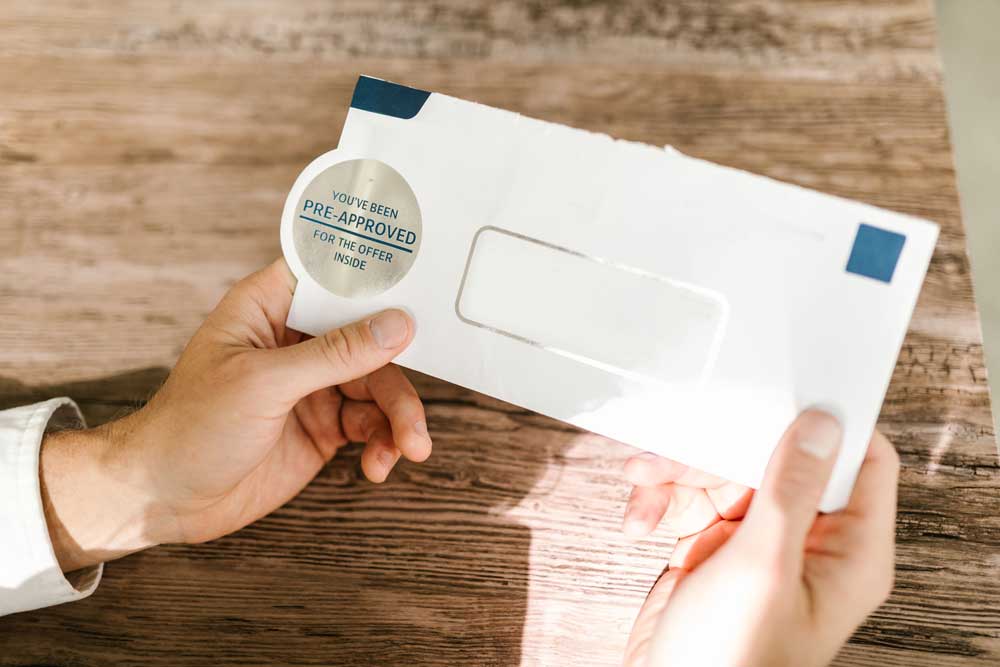
Direct mail has been written off more times than we can count. Email was supposed to kill it. Social media was supposed to bury it. Targeted digital advertising was supposed to make it embarrassing. None of that quite happened, and in 2026, a well-aimed direct mail piece is one of the more reliably effective things a North Wales business can do.
This isn't a contrarian piece. We're not trying to sell you on direct mail because we print it. We print it because, when it's done properly, it works, and we'd rather customers know how to do it properly than waste their budget on it badly. So this is what direct mail looks like from our side, and how a business in this part of the world can get the most out of it.
Why direct mail still works
The reason direct mail keeps surviving is simple: people don't ignore physical post the way they ignore email. Email open rates for a marketing message rarely break 25 per cent. A well-targeted direct mail piece gets opened around 90 per cent of the time. Even allowing for plenty of "open and bin straight away", the attention numbers don't compare.
That doesn't mean direct mail is a magic bullet. It means it's a different tool. It works best when you have:
- A specific message for a specific audience
- Something physical worth opening (an offer, an invitation, a useful object)
- A clear next step (call, visit, scan, claim)
- A reasonable expectation that the recipient already trusts your name, or has a reason to
It doesn't work when you treat it like email and post fifty thousand identical leaflets through letterboxes in a postcode you've never thought about. That's just expensive litter.
What "direct mail" actually means
Direct mail isn't a single product. It covers a range of pieces, all sent through the post (usually Royal Mail) to a named or addressed audience:
- Addressed mail. Each piece carries the recipient's name and address. This is the standard for proper direct mail: newsletters, member communications, business prospecting, fundraising appeals.
- Unaddressed mail (door drops). Pieces delivered to every address in a defined area, no names. Less precise but cheaper per piece for genuinely geographic offers (local event, new branch opening, takeaway menu).
- Personalised direct mail. Each piece is slightly different. Different name on the front, different offer code, different message based on what we know about the recipient. This is where digital print earns its place over litho.
- Mailpacks. Multi-part pieces in an envelope: letter, brochure, reply card, sometimes a freebie. Standard for fundraising and high-value B2B.
The pieces that make a campaign
A direct mail campaign is rarely just a print job. Five things need to happen, in order:
Design. The piece itself needs to be designed for the post: visible from the moment it hits the doormat, opens quickly, makes its point fast. Email-style design rarely translates well to a physical piece. Our in-house design team handles this regularly and can take a brief from scratch or work from your existing brand.
Print. Litho for runs above a few thousand identical pieces; digital for shorter runs or anything personalised. The crossover sits somewhere between 1,000 and 3,000 copies for most jobs. Most of our direct mail campaigns use a mix.
Data. The mailing list. If you're doing addressed mail, this is the single biggest determinant of success. We'll talk about lists more below; what matters here is that your data needs to be clean (no duplicates, correct addresses, current).
Fulfilment. Folding, stuffing into envelopes, sealing, sorting by postcode. We do all of this in-house at our Llangefni works, so the print and the mailing don't sit in different buildings waiting for someone to drive between them.
Postage. Royal Mail has business mail rates that are significantly cheaper than buying stamps. We have access to these through Mailmark and the bulk-mail system, and the savings often pay for a large chunk of the print and fulfilment cost on a campaign of any scale.
The economics, honestly
Direct mail isn't cheap per piece. Print, fulfilment and postage on a basic A5 mailer is rarely less than 60p per piece including everything. For a 5,000-piece campaign you're looking at a few thousand pounds before you've factored in design.
The question isn't whether that's expensive in absolute terms (it usually is), but whether the conversion makes the maths work. A B2B mailer with a 2 per cent response rate on a £500-value product makes sense at scale; a £20-value offer probably doesn't. We'll be honest about this when we quote.
For local Anglesey or North Wales businesses, the economics often work better than for national campaigns. Distribution is concentrated, your customers know the area, and the response usually walks through your door rather than dialling a national number.
Lists beat creative, every time
The single biggest factor in whether your direct mail campaign succeeds is who you send it to. A brilliant design sent to the wrong list will underperform a plain piece sent to the right one.
For local businesses, the best lists are usually the ones you already have: existing customers, lapsed customers, enquiries who didn't convert, people who signed up to a mailing list but haven't heard from you in a while. Bought lists work for some sectors (B2B prospecting, for example) but are generally a worse investment than warming up the contacts you already have.
If you're doing unaddressed door drops, the choice is about geography rather than people. We can help you scope which postcodes will hit the right audience for your offer.
Copy and design that earns the open
A direct mail piece has about three seconds to earn the opening. The envelope or the leading panel needs to do something the eye stops on: a personal name on the envelope, a piece of useful information visible through a window, a tactile finish, a clear offer.
Inside, the rules are similar to good copy anywhere: one clear message, one call to action, one reason to act now. Crowded pieces with five offers and three calls to action almost always underperform clean pieces with one of each. A well-designed folded leaflet in a window envelope still outperforms most cluttered mailpacks.
We're not designers in the agency sense, but we've seen enough direct mail at this point to spot when a brief needs tightening before it goes to print. We'll usually say so.
Postal discounts: the underrated lever
Royal Mail's business mail rates are the unsung hero of any direct mail budget. The savings come from:
- Pre-sorting by postcode before posting (we do this in-house)
- Using machine-readable address formats and Mailmark barcodes
- Going through the bulk-mail system rather than the standard letter service
- Combining multiple mailings to hit volume thresholds
For a campaign of a few thousand pieces, the savings on postage alone can pay for a meaningful share of the print cost. This isn't a minor detail. It's why doing direct mail through a printer that also handles mailing usually works out cheaper than doing the two separately.
Questions we get asked
Does direct mail still work in 2026?
For the right business, with the right audience and a clear offer, yes. Response rates on well-targeted direct mail consistently beat marketing email by a meaningful margin (at least five to ten times higher on most B2B sends we've seen), and physical pieces get opened far more often than emails do. The honest caveat is that "well-targeted" is doing a lot of work in that sentence. A scattergun direct mail campaign with no list discipline will underperform a focused email.
What kind of response rate should I expect?
It depends heavily on the audience and the offer. For mail to existing customers with a strong incentive, response rates of 5 to 10 per cent are achievable. For cold prospect mail in B2B, 1 to 2 per cent is more typical, and that can still make excellent commercial sense for high-value products. For unaddressed door drops promoting a local event or service, 0.5 to 2 per cent is the realistic range. We always set expectations against your specific scenario before you commit.
Do you handle the mailing, or do we do that ourselves?
We handle the full process in-house: print, fold, insert, seal, sort by postcode, and despatch through the Royal Mail business mail system. You don't need to touch a single envelope. Some customers prefer to do the mailing themselves (it can make sense for very small or hyper-personal sends), and we're happy to print and supply unfolded sheets if that's what you'd rather. But the savings on postage and time usually mean letting us run the whole job works out cheaper than splitting it.
How do I build a mailing list for a local campaign?
For local Anglesey or North Wales campaigns, the most cost-effective lists are usually the contacts you already have: past customers, enquiries from your website, attendees of past events, lapsed members. For unaddressed door drops, the choice is about postcodes rather than people, and we can help you scope the right area for the offer. Bought lists work in some B2B sectors but are generally a worse return than warming up the contacts already on your books.
Are postal discounts really significant?
Yes. Royal Mail business mail rates are substantially cheaper than stamps, particularly when the mailing is pre-sorted by postcode and uses machine-readable address formats. For a 5,000-piece campaign, the savings on postage alone can run into hundreds of pounds, often more than enough to pay for the design or the fulfilment work. It's one of the reasons doing direct mail through a printer who also handles mailing usually works out cheaper than buying the two separately.
Thinking about a direct mail campaign?
If you've got a campaign in mind, whether it's a fundraising appeal, a customer newsletter, a B2B prospecting send, a local event mailer, a member communication or a one-off promotional drop, we'd be glad to scope it with you. We'll quote print, fulfilment and postage as one number, so you can see the full economics before committing. No upsell, no agenda.
Drop us a line, or have a look at our direct mailing page if you'd like to see what we mean. There's a full list of what we do under one roof too, if direct mail is part of a bigger project.