

Christmas cards for businesses: getting them right (and out in time)
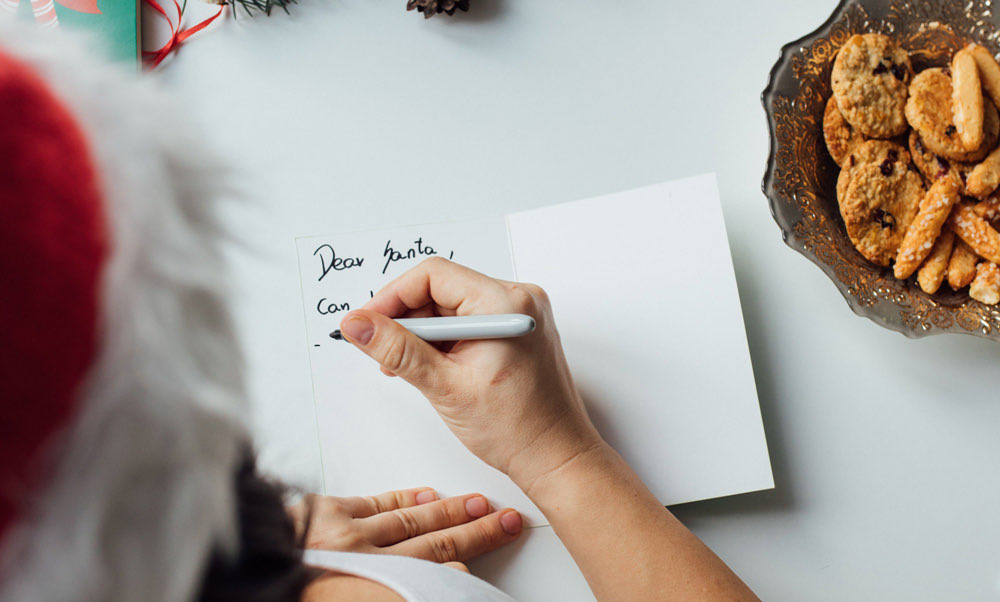
Most business Christmas cards get glanced at and put on a shelf. Some get put on a mantelpiece for the season. A very few get kept in the office, pinned to a noticeboard, or remembered. The gap between those categories has almost nothing to do with the printed message and quite a lot to do with the choices made in September and October.
We print a lot of business Christmas cards at our works in Llangefni. Every year, most orders come through in November when the pressure is already on. Here's what we'd think through with you if you started earlier, and what still helps if you're reading this in the middle of it.
Timing: work backwards from mid-December
The single most useful piece of advice on business Christmas cards is this: get them out by the second week of December at the latest. After that, they arrive alongside a pile of others and lose the individual attention that made sending them worthwhile.
Working backwards:
- Cards on desks by 15 December. Post them 8 to 12 December, using a first-class or business post service. Second-class posting on 5 to 8 December is workable, but tight.
- Cards ready to write and post by early December. Print typically completes 3 to 5 working days from artwork sign-off for a standard run.
- Artwork signed off by mid to late November. Allow a week for the address list, envelope printing, and any handwriting.
- Design and quote agreed by early November. Which means starting conversations in October.
None of this is unusually generous. It's the timeline that comfortably delivers a card into a client's hands while they still care. Compress it and something will suffer, usually the address list or the handwritten touch.
Design: understated ages well
The temptation with a Christmas card is to make it obviously festive. Red and green, snowflakes, robins, stars. All of this can work, and often the very best Christmas cards lean into it warmly. But the ones that get kept tend to sit somewhere quieter.
Design choices that tend to age well through the season:
- A restrained palette. Deep green and cream, navy and gold, warm grey and copper. One colour beyond the black-and-white does more than three.
- A single strong image over decorated typography. A striking silhouette of local landmarks (Menai Bridge, Llanberis, the coast) reads better across a season than clip-art snowflakes.
- Genuine typography, not "festive fonts". The Christmas fonts many templates offer date the card immediately.
- A brief, sincere message inside. Two sentences. Wishing well, saying thank you, signed by the sender in ink. That is genuinely all a business Christmas card needs to do.
If you don't have a designer, our in-house design team handles seasonal card design regularly and can produce something considered from a rough brief. Cards to a professional client list can also lean fully non-Christmas: a "with best wishes for the new year" card sent between Christmas and New Year sidesteps the December rush entirely and often reads as more thoughtful.
Paper, finish, and envelope
The single most useful upgrade for a business Christmas card is a heavier stock than the default. A 300gsm to 400gsm card feels considered in the hand rather than flimsy. On our digital press, we can print on stocks up to 400gsm, which is right for almost any card.
Other choices worth making:
- Silk-coated stock reads bright and clean, and photographs well for social sharing.
- Uncoated stock reads warmer, softer, more editorial. Suits a card with a landscape image and a quieter palette.
- Printed envelopes in the same house style as the card. The envelope is what the client sees first, and a plain envelope with a printed sticker looks exactly like what it is.
None of these choices push the price up dramatically at a run size of 200 to 500 cards, which is where most business Christmas card orders sit.
Personalisation, address list, and handwriting
Everyone knows the difference between a card addressed to the recipient by name and a card addressed to "Dear Client". Very few businesses do the first well, because the address list gets left until the last week and then rushed.
What works:
- Clean the address list in October, not December. Wrong names on Christmas cards read worse than not sending one.
- Personalise the salutation, at least. "Dear Sarah" trumps "Dear Sir/Madam" every time. Our digital press supports variable-data print, so we can produce a run where each card carries a personalised line without slowing the print.
- Handwrite the signature. A printed "Merry Christmas from the team" signed by a real person in ink is the whole point of the exercise. If a card isn't going to be signed, digital is honestly the better format.
- Consider a handwritten line above the signature. One personal sentence to your top ten or twenty clients (thanks for a specific project, a note about a shared conversation) is worth more than a hundred generic cards.
Digital cards versus print
An honest word about the alternative. A well-designed email Christmas card, sent from a real person's address with a specific message, is genuinely useful and costs almost nothing. For a wide business list, or a client base that lives in Slack and Teams, digital may be the right answer.
Where printed cards keep their edge:
- Top-tier client relationships. A card in the post from a supplier reads as care in a way an email does not.
- Public sector, agricultural, and traditional-industry clients. Where the printed card is still the expected form.
- Where the sender wants to include a small gift, a calendar, or a printed year-in-review.
- Where the sender is a business whose brand rests on craft, quality, or heritage.
For most businesses the honest answer is: send fewer, better cards to the people who really matter, and email everyone else. That way the physical card retains its meaning.
Common questions
When should we order business Christmas cards?
Ideally mid-October. That gives time for design, proof, print (3 to 5 working days from sign-off), address list cleaning, envelope printing, and handwriting. Left until the last minute (last week of November onwards), it's still possible, but something (usually the handwriting or the address list) gets skipped.
Can you print envelopes to match the card?
Yes, and this makes a bigger difference than most senders expect. A printed envelope in the same house style as the card is what the recipient sees first, and it changes the impression completely from a plain envelope with a stuck-on label. We can print standard envelope sizes to match a folded card or supply a coordinated envelope with any run.
Can you handle the address list and personalisation?
Yes. Send us a spreadsheet with recipient names and addresses (a simple CSV is fine) and we'll produce a run with each card and envelope personalised. Variable-data digital print handles this efficiently, and the finished result is a stack of cards each addressed to a real person, ready to sign and post.
What stock and finish do you recommend?
For most business Christmas cards, 350gsm silk-coated stock is the sweet spot. Substantial in the hand, with clean colour reproduction. Uncoated stocks in a similar weight work beautifully with quieter designs.
Can we use recycled or sustainable paper?
Yes. We can source FSC-certified stocks and recycled options for the card and envelope, so the finished piece can genuinely be described as being on responsibly sourced paper. If sustainability is a specific brand commitment, tell us at the quote stage and we'll spec it accordingly.
Planning your business Christmas cards?
If you're planning a business Christmas card run and would like to talk it through, please get in touch. We're happy to send samples of stocks and finishes so you can see them in person before deciding, and to walk through timing, list, and personalisation options.
There's a full list of what we do under one roof if the Christmas run is part of a wider seasonal campaign, from calendars and year-end reports to direct mail and printed correspondence.